Quick answer
Start with the ground and the travel between tasks. Wheeled excavators suit frequent repositioning on suitable firm surfaces; tracked excavators are often a better starting point for soft or uneven ground. Then compare the exact machine's working envelope, stability requirements and transport plan. Neither undercarriage guarantees suitability by itself.
Key takeaways
- Describe ground conditions before choosing a model.
- Include travel, setup and transport in the comparison.
- Inspect the installed running gear, not just the engine.
- Confirm road-use requirements locally before assuming a wheeled machine can travel between sites.
- Confirm transport dimensions before committing.
1. Map the job and the route between tasks
Write down whether the machine will work on paved roads, compacted yards, loose fill or wet ground. Add access width, slopes, overhead restrictions and the area available for swinging and stabilisers. A short site description and photographs help a seller propose a useful shortlist.
Wheels and tracks behave differently on these surfaces. The manufacturer's comparison is a starting point, but actual ground pressure, tyres or track shoes and the working configuration still matter. Avoid choosing from a machine's travel speed alone. A route that requires frequent setup or special transport can change the decision.
2. Compare the whole working cycle
A wheeled machine can be attractive for utility work at several nearby positions. A tracked machine may suit extended digging on prepared working ground where repositioning is less frequent. These are shortlist criteria, not promises about every machine or site. Ask for the operating manual and configuration-specific limits.
Use the same task description when comparing offers. Include bucket, reach, digging depth and any lifting requirement. Lifting capacity depends on the approved configuration and load chart; model weight alone does not establish what can be lifted.
| Decision | Wheeled machine | Tracked machine |
|---|---|---|
| Moving between work positions | Check route, tyres and setup time | Check travel distance and surface protection |
| Preparing to work | Confirm required blade or stabiliser arrangement | Confirm a suitable working platform |
| Moving between sites | Verify road-use rules and transport options | Quote suitable transport and loading arrangements |
3. Inspect the costs that differ
For a used wheeled excavator, ask the inspector to cover tyres, wheels, steering, brakes, axles, travel modes and fitted stabilisers. For a tracked unit, request the condition of both track assemblies and final drives. Obtain a written repair scope instead of comparing two broad condition grades.
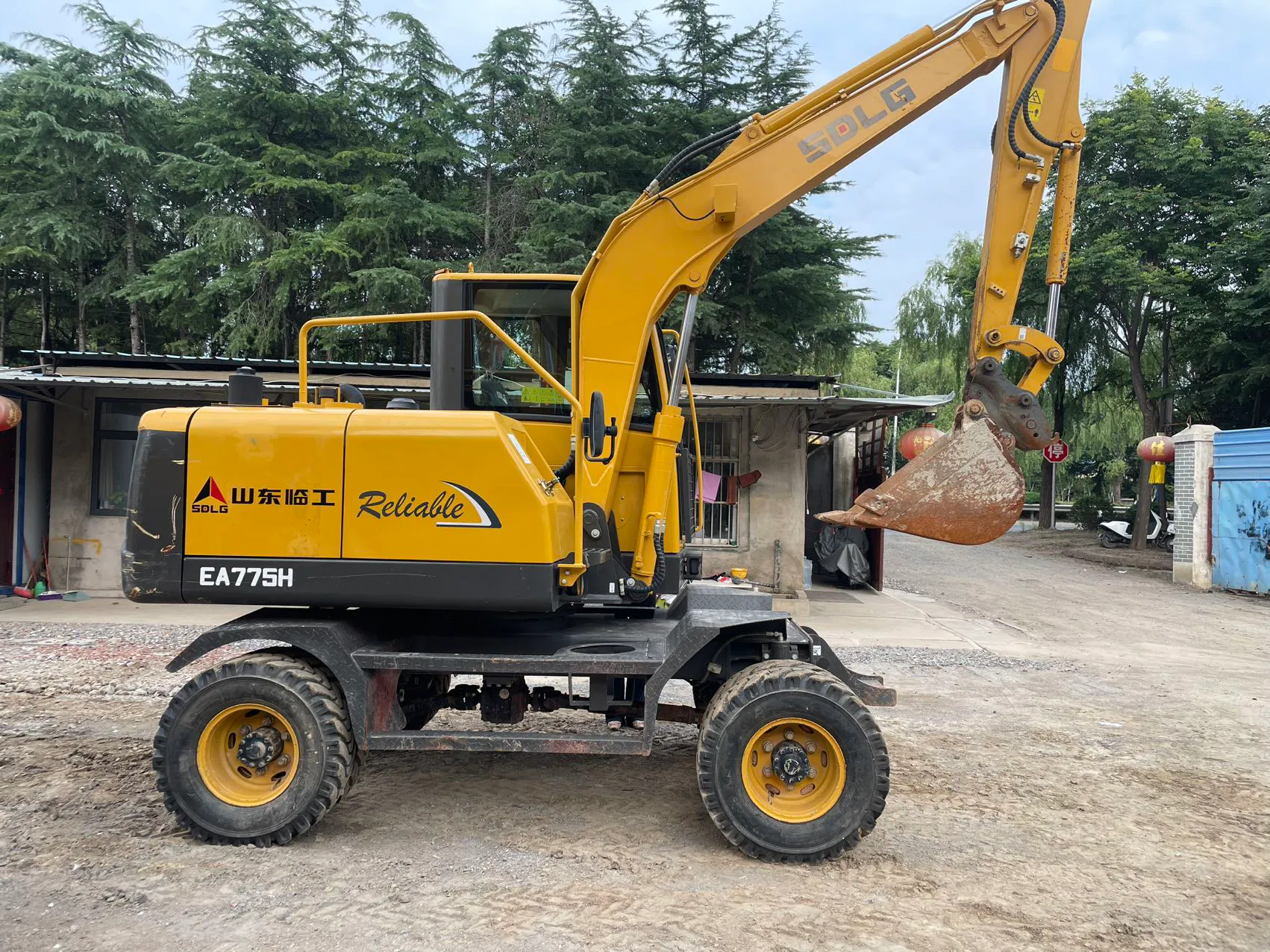
SDLG EA775H stock WX-260816-053 and EA780H stock WX-260816-045 provide starting points in Plinton's published wheeled inventory. Their listing photographs are machine records, not certificates of current availability or road compliance. Request current evidence using the inventory ID.
4. Check the move to your next site
Request transport length, width, height and mass for the actual configuration, including the attachment. Ask the carrier whether anything must be removed and who will arrange that work. Compare these requirements with the access at collection and delivery. Do not use operating weight as a substitute for a complete transport brief.
5. Record what the inspection could not establish
Keep a short acceptance list beside the quotation: confirmed configuration, observed faults, agreed repairs and checks still outstanding. If the machine cannot be demonstrated in the intended travel or working mode, record that limitation. Decide what evidence must arrive before acceptance rather than treating an incomplete demonstration as a passed test.
6. Send a brief that can be quoted
Tell Plinton your main task, ground conditions, daily travel pattern, required attachment and delivery location. Include the inventory IDs you want to compare. Ask for separate confirmation of the fitted equipment, unresolved inspection items and transport dimensions.
Before selecting a unit, compare purchase, immediate repairs, transport and local support together. Keep road registration and destination compliance as questions for the appropriate local authority or adviser; a supplier's product page cannot decide them.
Frequently asked questions
Are wheeled excavators always better for cities?
No. Check the actual surface, access, setup space, work and local travel rules. A confined or soft-ground urban site may call for another configuration.
Can a tracked excavator work on paving?
Assess the surface, track configuration and any protection required with the site manager. Do not assume that a particular track type prevents all damage.
References
- Wheeled vs. Tracked Excavators ↗Cat Rental Store · Accessed 2026-09-19
- Tracked vs Wheeled Excavators ↗JCB · Accessed 2026-09-19
Editorial standard: Updated 2026-09-19. This guide separates general process guidance from machine-specific facts. Confirm the current inventory ID, machine evidence, inspection scope, carrier quotation and destination requirements before making a transaction decision. Read our editorial and verification standard.