
Quick answer
Choose the bucket for the material and task, then check the machine and attachment manufacturer's compatibility limits. Width, volume, empty weight, duty class and mounting are different questions. A large advertised capacity does not prove that a bucket is suitable for dense material or for the machine as configured.
Key takeaways
- Describe material density, abrasion and the required finish.
- Check bucket weight as well as capacity.
- Verify mounting and coupler compatibility.
- Confirm which bucket is included in the actual sale.
- Record attachment identification in the final quotation.
1. Start with the material and the finish
Explain whether the work involves loose soil, abrasive material, trenching, grading or separating material. Include the desired trench width or finished surface. Bucket names differ between suppliers, so ask for the construction and intended duty instead of relying on a label such as heavy duty.
Caterpillar's bucket guidance highlights material and application when selecting capacity and construction. The table below is a shortlist, not a compatibility chart. A specialist should check the proposed bucket against the exact machine and work.
| Task | Bucket to discuss | Key check |
|---|---|---|
| General digging | Digging bucket | Material, teeth and permitted load |
| Abrasive or rocky material | Suitable reinforced bucket | Wear protection and attachment weight |
| Finishing and ditch cleaning | Grading or ditch-cleaning bucket | Width, edge and any tilt function |
| Separating loose material | Skeleton bucket | Required spacing and approved use |
2. Check capacity, mass and mounting separately
Ask for capacity and its measurement basis, internal width, empty weight and attachment identification. Confirm the pin dimensions or coupler interface with the appropriate technical supplier. A similar-looking bucket from another excavator is not proof of a safe fit.
The permitted combination depends on the machine's configuration and manufacturer limits. Do not calculate lifting ability from bucket volume or excavator tonnage. If a coupler or tilt system is included, account for its effect on geometry and attachment weight using the relevant documentation.
3. Separate the fitted bucket from the brochure
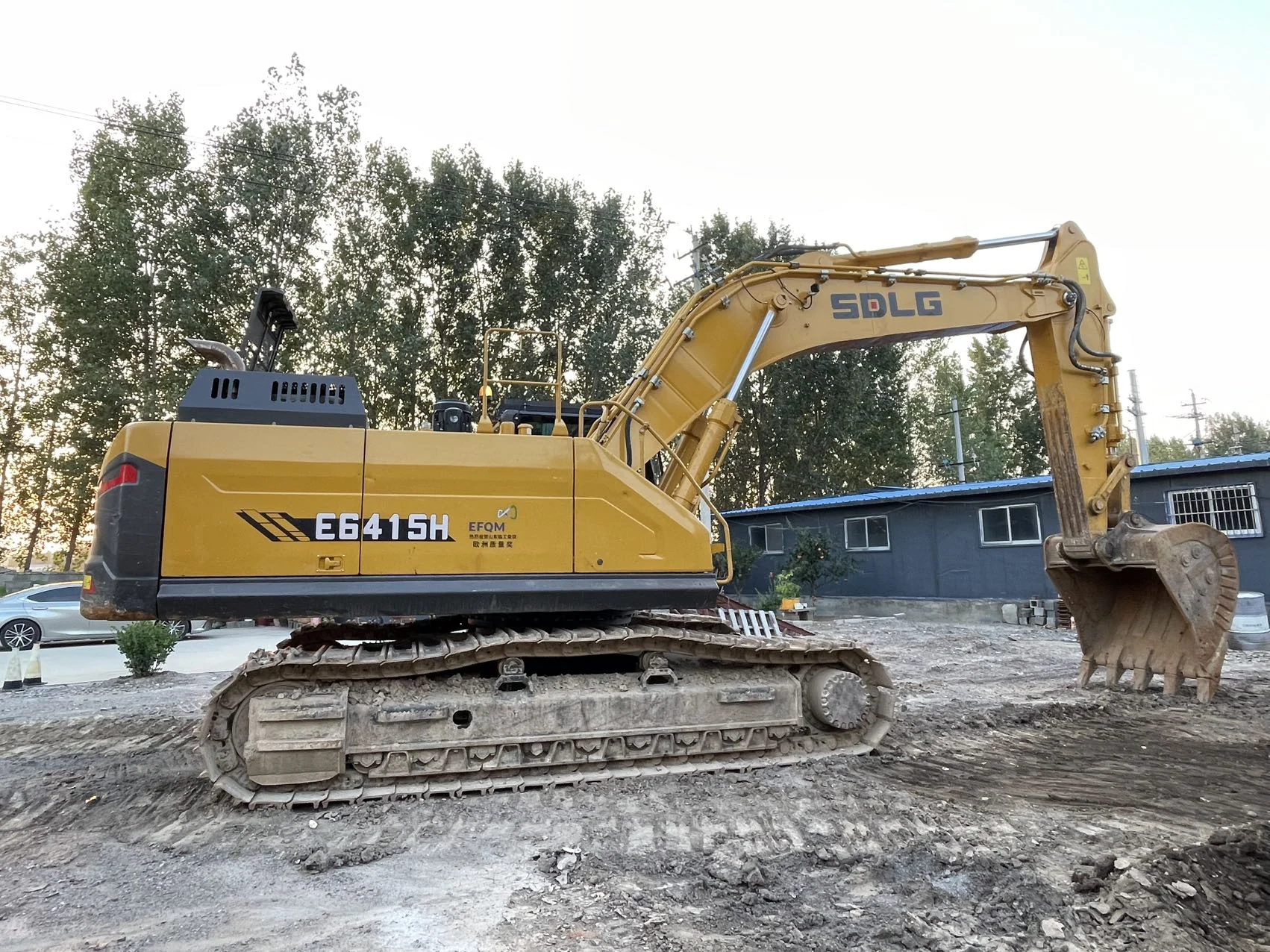
For SDLG E6415H stock WX-260910-006, the published inventory record lists a 2.5 m³ bucket, while the linked SDLG China model reference lists 2.3 m³. These describe different sources. The stock figure is not a measured capacity certificate, and the standard brochure figure does not prove which bucket is fitted.
Before purchase, request current photographs, bucket identification or measurements and confirmation of the included attachment for that inventory ID. Keep any mismatch open until resolved. A catalogue specification should never silently overwrite a machine-specific record.
Sources for this section:[3]
4. Check the receiving process as well as the bucket
Describe where the material goes after digging: a truck, stockpile or finished trench. Include loading clearance and any width restriction. A bucket that suits the material may still be inconvenient for the receiving vehicle or work area. Review the complete cycle with the machine and attachment suppliers before choosing a larger capacity.
5. Make the handover identifiable
Keep photographs of the agreed bucket and its markings with the quotation. If the attachment changes before dispatch, ask for revised identification and confirmation of compatibility. Record whether teeth, adapters and any coupler are included. This avoids comparing one photographed configuration and receiving a different, undocumented combination.
6. Put the attachment into the inspection and quote
Ask the inspector to document the cutting edge, teeth and adapters, side plates, pin areas, visible weld repairs and mounting condition. Request findings and any proposed repairs in writing. Photographs can identify questions, but they cannot establish hidden condition or remaining life by themselves.
Send Plinton the machine inventory ID, material, required width and intended task. Ask the quotation to name the included bucket, any additional attachments and the agreed condition at handover. Confirm transport dimensions and packing if the bucket will be shipped separately.
Frequently asked questions
Is the biggest bucket the most productive choice?
Not necessarily. Material, permitted load, machine configuration and the working cycle determine suitability. Compare approved combinations for the task.
Does the manufacturer's standard bucket come with a used machine?
Only if the offer confirms it. Ask for the identity and condition of the attachment included with the particular inventory ID.
References
- Choosing a Bucket? Start with These Three Questions ↗Caterpillar · Accessed 2026-09-19
- Tips for Choosing Cat Buckets ↗Caterpillar · Accessed 2026-09-19
- E6415H manufacturer specifications for China ↗SDLG · Accessed 2026-09-11
Editorial standard: Updated 2026-09-19. This guide separates general process guidance from machine-specific facts. Confirm the current inventory ID, machine evidence, inspection scope, carrier quotation and destination requirements before making a transaction decision. Read our editorial and verification standard.